Friday, March 12, 2021


Let's give something back to Cuba!


Cuba leads in the global fight against

COVID-19 Pandemic

Stabroek News On March 8, 2021 @ 2:01 am In In The Diaspora |


By Isaac Saney

Isaac Saney is a Cuba specialist at Dalhousie University, Canada and Co-Chair & Spokesperson, Canadian Network On Cuba

Cuba continues to receive international accolades for its singular role in the global fight against the COVID-19 pandemic. This is illustrated by the numerous nominations of Cuba’s internationalist medical contingent – the Henry Reeve International Medical Brigade against Disasters and Serious Epidemics – for the 2021 Nobel Peace Prize. 

Many countries are drawing on Cuba’s expertise in fighting COVID-19.  Almost 4,000 medical personnel in at least 39 countries and territories have participated and are participating in the frontlines of the fight against the coronavirus in Latin America, the Caribbean, Africa, Asia, Europe and the Middle East. The Caribbean and Latin America have particularly benefited, with Cuban medical brigades in Jamaica, Barbados, Antigua and Barbuda, Saint Vincent and the Grenadines, Haiti, Saint Lucia, Suriname, Grenada, Dominica, Saint Kitts and Nevis, Mexico, Belize, Venezuela and Nicaragua. Henry Reeve healthcare personnel are organized in brigades depending on the local request. To date, 55 such brigades have served abroad during the pandemic, and several countries have requested the assistance of a second brigade when their case load spiked. 
Cuba also offers treatment regimens, some of which are not available in the United States. A key component of the protocols being used on the island and in the medical missions is Cuba’s Interferon Alfa 2B Recombinant (IFNrec). Scientific journals like the Lancet and the World Journal of Pediatrics have recognised the impact of IFNrec.  It has been used against various viral infections for which there are no specific therapies available, having demonstrated its ability to activate the patient’s immune system and to inhibit viral replication. In Cuba, IFNrec has been used successfully to combat outbreaks of dengue hemorrhagic fever and conjunctivitis, as well as to treat Hepatitis B and C. It also demonstrated effectiveness in combatting and providing protection against infections caused by various versions of the coronavirus, such as SARS-CoV (the coronavirus of the 2002 outbreak) and SARS and MERS-CoV (the coronavirus of the 2012 outbreak).
 IFNrec is a crucial part of Cuban treatment protocols and is also used as a preventative measure to protect healthcare workers from contagion. Various countries have incorporated IFNrec into their national protocols and clinical guidelines for COVID-19 treatment, where it is a crucial component of the anti-viral treatment to combat the coronavirus. Nebulized Interferon Alfa 2B is also recommended as a treatment for children and pregnant women with COVID-19.  While IFNrec is not a panacea, it has shown considerable promise as a therapeutic response to COVID-19 in boosting the immune system’s response. Additionally, the Cuban-developed Itolizumab and Biomodulin T have been credited with reducing the death toll from COVID-19 and speeding recovery, especially in high-risk patients. 
Cuba is also testing four COVID-19 vaccine candidates: Soberana 1 and Soberana 2, developed by the Finlay Vaccine Institute, and Mambisa and Abdala, produced by the Center for Genetic Engineering and Biotechnology.  To date results have been very encouraging.  At the time of writing, three of the candidates are either in phase 1 or phase 2 of clinical trials. Soberana 2 is already in phase 3 testing, with Abdala poised to start later in March. These testing stages evaluate efficacy and safety. All candidates must pass phase 3 testing in which the efficacy and safety is further confirmed by expanded trials encompassing thousands of persons. If they successfully pass this stage, Soberana 2 and Abdala will be very close to final approval for use in Cuba and the world. Havana is already making preparations for mass production. 
The Caribbean island has considerable expertise in vaccine design, development and manufacture. Currently, Cuba’s biopharmaceutical industry already produces 8 vaccines that are integral to the island’s immunization program. In the 1980s, it developed the first vaccine against meningitis and, also produces a Hepatitis B vaccine. 
The Cuban government plans to have all Cubans vaccinated against COVID-19 by the end of 2021. Vaccinations will also be available to visitors. Havana also intends to produce 100 million vaccine doses for use across the global South, with various countries
having already reserved doses. Export of Cuban pharmaceutical products is managed through the state company BioCubaFarma, which currently distributes more than 300 products to at least 50 countries. Rolando Pérez Rodríguez, BioCubaFarma’s director of Science and Innovation, outlined Havana’s objective: “In the second half of the year, we will be able to immunize the entire population, and also provide doses to the countries that require it…It is about sharing with the world what we are, the answer that Cuba can give to the problem of the pandemic.”
Driving Cuba’s vaccine production is not only the determination to protect and preserve the health of the people of Cuba and the world but also the exercise and defence of sovereignty and the right of self-determination.  For example, Soberana means sovereignty in Spanish, while Abdala is named for the famous poem by José Martí, Cuba’s national hero and principal intellectual author and organizer of the 1895-1898 war to free Cuba from Spanish colonial domination. Mambisa is a direct reference to Cuba’s national liberation fighters during the19th century wars for independence.
In this time of pandemic, Cuba’s international medical humanitarianism reflects the island’s history and dedication over the last six decades to concrete international solidarity. Under the leadership of Fidel Castro, Cuba established an unparalleled legacy of internationalism: actively supporting and engaging in the anti-colonial and national liberation struggles, and social development and emancipation aspirations of countries across the global South. From the early 1960s, more than 400,000 Cuban healthcare workers have served in 164 countries.  In southern Africa, more than 2,000 Cubans gave their lives to defeat the racist apartheid regime in South Africa. Nelson Mandela never forgot. After he was released from prison, one of the first countries outside of Africa and the first country in Latin America that he chose to visit was Cuba. 
Today this commitment to humanity is mirrored in the thousands of Cuban medical personnel and educators who continue to serve around the world. Many of the medical personnel now intimately involved in the fight against COVID-19 are part of the specially trained Henry Reeve International Brigade, which distinguished itself in the fight against the 2014-2016 Ebola epidemic in West Africa. 
As Havana provides invaluable international assistance, it is also engaged in its own fight against COVID-19 on the island. It is doing this in the face of an unrelenting economic war waged by Washington against the people of Cuba: a war that limits the island’s access to equipment and other necessary items required to preserve the health of Cubans. Under the Trump regime, the U.S. economic war against Cuba reached unprecedented levels with more than 240 distinct measures being targeted against the island nation. 
Standing out as the epitome of duplicity was the designation of Cuba by the United States as a sponsor of state terrorism. It is Cuba, since 1959, that has been the victim of all manner of terrorist attacks that have been carried out with the complicity, participation and sponsorship of Washington. Many of these acts of terror were directly launched from and/or planned in the United States. Some 3,478 Cubans have been killed and 2,099 injured as a result of these acts of terrorism. 
This most recent move by the Trump regime reflected Washington’s failure to isolate Cuba in international relations and public opinion. This failure is poignantly underscored by the growing global movement – encompassing parliamentarians, prominent world figures, distinguished academics and multiple petitions – to award Cuba’s Henry Reeve International Brigade the 2021 Nobel Peace Prize. These nominations argue instead that it is Cuba that shows the world a model of international relations that stands diametrically opposed to terrorism. 
Despite ongoing U.S. aggression, Cuba continues to prioritise the health and lives of its citizens. For example, despite having a population similar in size to Los Angeles county in the U.S., Cuba has more than 70 times fewer deaths from COVID-19. In the case of New York City, Cuba’s death rate is more than 100 times smaller. The Cuban government affirms and upholds that healthcare is a human right and places the well-being of its people at the centre of its policies and political decisions. Every Cuban is visited regularly by a doctor and has free access to all the treatment protocols available on the island.  
There is a growing recognition that Cuba’s example needs to be globalized. A pandemic is by definition global. Surely, in the face of this worldwide menace, now is the time for international medical cooperation and solidarity? A time for joint efforts to confront COVID-19. A time to put political differences aside in order to save lives. As Cuban Foreign Minister Bruno Rodriguez declared on March 27, 2020:  “Humanity faces a common challenge. This pandemic does not respect borders or ideologies. It threatens the lives of all, and it is everyone’s responsibility to address it.” 
This is especially imperative as social fissures and chasms, the historic and prevalent inequalities, inequities and disparities, particularly in the healthcare system, have not only been starkly exposed but also amplified.  Recognizing this imperative, 15 U.S. cities, states and labour councils, at present, have passed resolutions calling for medical collaboration and cooperation with Cuba.
Cuban internationalist medical missions are the lived expression of symbolic dreamcatchers. Just as dreamcatchers allow only good dreams to pass through, while preventing nightmares, so too the Cuban medical internationalist missions do their utmost to stop the nightmares of disease from reaching the people. In the face of the COVID-19 pandemic ravaging the world, in a world fraught with the dangers of planetary wide conflagration, the Cuban medical brigades demonstrate that relations among the world’s nations and peoples do not have to be determined by self-interest and the pursuit of power and wealth. They hold out to us the inspirational example that it is possible to build relations based on genuine human solidarity.
Cuba is also in the midst of a significant domestic project of rectification and economic renewal. The immediate context is monetary unification and the recent significant expansion of the non-state sector i.e. self-employment and private economic activity. The broader context is the more than decade long series of economic measures to address inefficiencies and distortions in the Cuban economic model. As the new arrangements are being phased in, the Cuban government has repeatedly reaffirmed its commitment that no one will be abandoned or left to fend for themselves. All the social guarantees remain in force, including universal free health care and education and an array of other social programs. 
The aim of the restructuring is to strengthen social programs, not privatize nor dismantle them. As former Cuban President Raúl Castro stated the goal is to achieve a sustainable and prosperous socialism. However, it is no small feat for any country to overcome the worldwide economic crisis in a manner that favours its people, not the global monopolies.  A number of questions naturally arise: How will the historic commitment of the Cuban Revolution to the goal of equality – especially gender and racial equity – be affected by the new economic policies? Do these measures entail fundamental departures from the previous praxis of the Cuban Revolution?
Across Cuba a frequent slogan emblazoned on billboards is, “Each day in the World 200 Million Children Sleep in the Streets. Not one is Cuban.”  Perhaps, in these uncertain times, in the face of immense challenges, this best sums up what Cuba represents and strives to be.

Sunday, September 27, 2020


Somos del Barrio -We are the neighbourhood 
Gerardo Hernandez, Cuban Five Hero.


Visit: Sportsnet interview with Bill Ryan:


Bat man and Gervan take swing at saving Cuban baseball season

Patrick Kennedy articleSeptember 25, 2020 

Kingston Whig Standard

Gerardo Hernandez, a member of the Cuban 5, holds a Cubacan "trophy" bat while surrounded by members of Cuba's first family of baseball, the Gurriels, and bat maker Bill Ryan. From left are Ryan, Lourdes Gurriel Sr., Hernandez, ex-Baltimore Oriole Yuniesky Gurriel, current Toronto Blue Jay Lourdes Gurriel Jr. and Houston Astro Yuliesky Gurriel. (Supplied Photo) JPG, KI


 Siembra -great music and a gift, by Arnaldo Rodriguez and Talismán
to the Committees for the Defense of the Revolution
celebrating their 60th Anniversary.


Thursday, September 10, 2020


Retired car salesman turning out baseball bats for Cuba

Sep 10, 2020   Ottawa Citizen


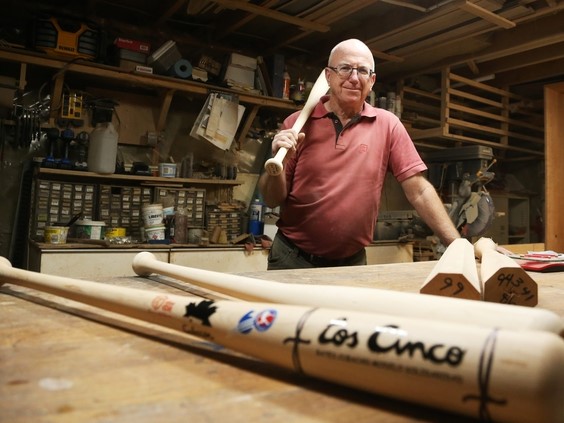
 From his basement woodworking shop in the Ottawa Valley, former car salesman Bill Ryan, 66, is turning out finely-crafted maple bats for Cuba's beleaguered baseball leagues. PHOTO BY JEAN LEVAC /Postmedia

A retired Ottawa Valley car salesman is turning out hundreds of hand-made maple bats every year for Cuban baseball players as part of a decade-long effort to assist the impoverished island nation.

Bill Ryan, 66, spends 10 or 11 hours every day in his basement woodworking shop, making his now famous “Cubacan” bats.

This year, he wants to send 600 bats — they each cost about $50 — to Cuba, which is about to start its national baseball series. Professional quality bats are difficult to find and prohibitively expensive in Cuba, which remains the subject of a strict U.S. trade embargo.

“The only way I can do this is to do all of the steps myself,” says Ryan, who lives on a rural side road south of Carleton Place, near Franktown.

He uses his own sawmill to cut the rectangular “blanks” from which he crafts a baseball bat. The blanks — rectangular blocks 36 inches long and three inches wide — are kiln-dried for three months to reduce their moisture content and weight.

Each bat requires about two hours of labour. Ryan uses a lathe to shape the bat, then sands it three different ways before applying two coats of paint, decals and two coats of varnish.

A careful record keeper, Ryan has made 2,967 bats since he launched his “hobby” a decade ago. Almost all of his bats are now in Cuba.

“When I made the first bat, there was no intention of making the second or the third: It just sort of built,” he says.

Like most Canadians, Ryan’s first exposure to Cuba came as a sun-seeking tourist.

A deeper involvement in the country started innocently enough when he decided to fashion a few bats as gifts for Cuban friends. A lifelong woodworker, Ryan made trophy bats that were more a decoration than a piece of baseball equipment.

In baseball-mad Cuba, however, the bats attracted attention and he was asked to make more, including bats that could be used in games. The maple bats quickly grew in popularity among Cuban players.

He was also asked to make bats as gifts for each of the Cuban Five — five intelligence officers who were arrested by U.S. authorities in September 1988. “Los Cincos” spent more than a decade in U.S. prisons after being convicted of spying. Cuba maintained they were in South Florida to monitor extremist exiles involved in a wave of terrorist bombings in Havana.

All of the men were released by 2014 and welcomed home as heroes in Cuba. Ryan met and befriended one of them, Gerardo Hernandez, and together they launched a grassroots organization, Cubacan, dedicated to improving the lives of ordinary Cubans.

Cubacan has shipped equipment and materials to improve bat making in Cuba. Last year, the organization delivered more than two tonnes of sports equipment to the island.

This year, Ryan wants to send 600 hand-crafted bats to the 16 teams competing in Cuba’s national baseball series, a key stepping stone to the Olympic Games for the country’s best players. The series starts next week.

Cuba is struggling to equip its baseball teams because of economic sanctions and new restrictions imposed by U.S. President Donald Trump. During the past four years, Trump has reversed the thaw in U.S.-Cuba relations orchestrated by his predecessor, Barack Obama, and tightened the sanctions that have stifled the Cuban economy for 60 years.

Ryan says U.S. efforts to damage Cuba even reached into the Ottawa Valley. Earlier this year, he says, under pressure from the U.S. Treasury Department, GoFundMe closed his fundraising account which had been created to send sports equipment to Cuba from Canada.

The Canadian Network on Cuba (CNC) is now leading the fundraising effort to raise $30,000 to send the Cubacan bats to Cuba.

Ryan still travels to Cuba once a year with his wife, Nora. It’s “incredibly satisfying,” he says, to watch a baseball player hit a home run with one of his bats, but seeing one break still makes him shudder.

Two years ago, Ryan received the Cuban government’s Friendship Medal, which has gone to people such as singer Harry Belafonte and actor Danny Glover.

“More than one million Canadians go to Cuba every year,” he says, “so we’re trying to suggest to some of those people to send a bat, offer a donation, give something back.”

Anyone interested in donating to the Cubacan bat program, known as Cubacan 6060, can go to theCNC’s website or email cubacanbats@gmail.com.

Cubacan6060 Bats for Cuba


Sunday, September 6, 2020


UNBLOCK ME UP

listen to this music and protest against the Cuban Blockade!


Wednesday, August 12, 2020

Eusebio Leal: the Historian


August, 1st, 2020

Eusebio Leal Spengler, the man who saved Havana, died at age 77 due to pancreatic cancer.  Leal has been -for more than half a century, well known as the Historian of the City of Havana and well respected in Cuba and around the world for his indefatigable work.  Eusebio Leal rebuilt palaces, fortresses, houses and squares, while at the Head of the office of the Historian and following UNESCO recognition of Old Havana as World Heritage site (1982).  The Historian managed donations and built a self-sufficient project sustained mainly with income raised through its own chain of renovated hotels. Most importantly, the Historian office provided needed social support and social work to the neighbours of Old Havana.  

Every morning people could see Leal walking through Old Havana something he did for decades. The Historian saw himself as a “guardian of memory,” and often expressed concern about those who loving decadent Old Havana forgot the many losses to time and change, losses he mourned dearly. The Historian knew he would never have enough time to achieve his entire goal -he would need many lives, he often said, to complete the work that kept him awake at night.  However, despite his concern and the size of the work Leal never gave up and instead tried with all his strength proving much could be achieved.  

The Historian rescued Havana through hard work, inexhaustible effort, and vision. He enlisted the support of anyone willing to bring to life his goal of restoring Havana to its original beauty. Since the 1960s, Leal dressed in grey a color he chose to facilitate communication with the men who helped him turn the old Palace of the Captain-Generals into the Museum of the City (of Havana). Men who were in jail but volunteered to work with him.  Leal was appointed Director of this Museum in 1967 and after his mentor, Emilio Roig de Leushenring, retired.

The Historian preferred blue for special occasions. Then, his passionate and knowledgeable speech would touch kings, popes, presidents, ministers, scholars and, very importantly, the many regular people who came in touch with him.  Leal guided Prince Charles, visiting from England, and King Felipe and Queen Letizia visiting from Spain.  His friendship and admiration for Fidel and Raul Castro and many Cuban political figures no doubt helped Leal achieve his dream. he was also a deputy to the National Assembly (Cuban Parliament) and was always open about his catholic faith, even at times where religion was strongly challenged.

Leal Spengler, born September 11th, 1942, was the son of poor farmers, the grandson of patriots and the great-grandson of immigrants of French and German background who arrived in Cuba from Haiti. He completed grade 5 when his mother sent him to an Asturian merchant she knew to complete an apprenticeship with him who failed to turn Leal into a merchant but succeeded in instill in him a strong faith and a wish of becoming a priest. Leal did not become a priest, he later said, because he could not remain celibate: “I loved women too much.” He married a few times and had five children, two of them living in Spain.  “Homeland and faith” his motto, insatiable reader from infancy and a regular reader of the Bible. I want to be remembered, he said, as a “Cuban devoted to his dream, a dream he was able to carry out mainly at the expense of wounds and indignities, sacrificing his private life.” Cubans knew Leal and his work through “Andar La Habana” (Walking Havana) a television program he did for years teaching Cubans to know and love their capital. Leal was the recipient of international recognition for his work, the last Order of Charles III from the King of Spain in November 2019 and Doctor Honoris Cause from Pontificia Universidad Lateranense (Pontificia Lateran University) on that same month and year.


See also: 

The Man Who Saved Havana, Smithsonian:

Monday, June 8, 2020


The Nobel Peace Prize for the Henry Reeve Brigade
The International Committee for Peace, Justice and Dignity calls on the friends of Cuba and men and women of good will to support the nomination of the "Henry Reeve International Medical Brigade Specialized in Disaster Situations and Serious Epidemics" for the Nobel Peace Prize for its significant contribution to humanity in the face of the pandemic caused by the Covid-19 coronavirus.

More than 1500 Cuban health professionals, doctors, specialists and nurses were requested by 23 countries in Europe, Africa, the United Arab Emirates, Latin America and the Caribbean to help them in this global crisis and are now working in those countries.

Other requests for cooperation are underway, constituting the only international medical contingent to provide a scientific and humanitarian response to the pandemic on a global scale.

The medical cooperation that took place in Pakistan and Haiti after the devastating earthquakes, and the extraordinary success in the face of major epidemics such as Ebola in Africa demonstrates their great medical-scientific training, the capacity and experience to save lives in situations of natural disasters and serious epidemics, and underscores their great values of altruism, solidarity and humanism. "The Henry Reeve Brigade has spread a message of hope throughout the world. Its 7,400 volunteer health professionals have treated more than 3.5 million people in 21 countries in the face of the worst disasters and epidemics of the last decade," said the World Health Organization when it presented the Dr Lee Jong-wook Public Health Award at a ceremony for them in Geneva in May 2017 during the 70th World Health Assembly.

The initiative to nominate the Henry Reeve Brigade for the Nobel Peace Prize, that has appeared in social networks since March, has taken shape in groups of friendship and solidarity with Cuba such as the Association Cuba Linda, the Association France-Cuba and Cuba Cooperation of France; the Circle of Granma in Italy; the page created in the social network Facebook, on behalf of the Greek solidarity groups by the outstanding friend of Cuba Velisarios Kossivakis, under the name "Nobel Price for the Doctors of Cuba", which has more than 13 thousand endorsers in Greece and tens of thousands of messages and interactions; the International Committee for Peace, Justice and Dignity of Brazil, Cubanismo of Belgium, the Movement of Solidarity and Mutual Friendship Venezuela-Cuba, Australia-Cuba Friendship Society, ACFS WA branch, the Association of Latin American Arab Solidarity José Martí of Lebanon and Madres Sabias of Spain. 

They are joined by solidarity groups in the US, such as the Network in Defense of Humanity - US Chapter, the National Network on Cuba (NNOC), IFCO/ Pastors for Peace, Code Pink and the US Chapter of the International Committee for Peace, Justice and Dignity.

We ask you to strengthen the bonds between all of us to work in unity of action and achieve the nomination of the Cuban International Medical Brigade "Henry Reeve" for the Nobel Peace Prize.

While the US doubles the blockade, it prevents Cuba in the midst of a pandemic from even acquiring the health supplies to face it and puts pressure on other countries by launching a campaign of lies and slander against Cuban doctors.

The rhetoric of hatred, expressed by US President Donald Trump, Mike Pompeo and servile OAS Secretary Luis Almagro, seems to have no end. Recently an additional two million dollars has been allocated to the USAID to attack Cuban medical collaboration. "Instead of wasting money on aggressions against international cooperation and the health of the people, the U.S. government should focus on preventing the illness and death of its citizens in the face of Covid-19," Cuban Foreign Minister Bruno Rodríguez said on Twitter.

In August 2019, to serve this same purpose, USAID, which provides resources to subversive programs against the Cuban government, allocated three million dollars. In less than a year, they have directed at least $5 million; taken from the pockets of American taxpayers to destabilize a program that's only purpose is to provide health to those who need it most, during this current pandemic, especially the countries of the Third World.

The small and besieged Cuba continues its heroic resistance, leaving no one behind, preserving its social conquests, its sovereignty and independence. Faithful to its principles of internationalism and cooperation, as recently expressed before the NAM summit by Cuban President Miguel Díaz Canel.
Cuba and its doctors are giving the greatest example of giving solidarity and love to the world.

Nobel Peace Prize to the Henry Reeve Brigade

#CubaSavesLives


CNC letter to the
Canadian Minister of  Foreign Affairs

The Honourable François-Philippe Champagne, MP
Minister of Foreign Affairs
125 Sussex Dr
Ottawa
ON K1A 0G2

Dear Minister Champagne,

Re: April 30, 2020 Attack on Embassy of Cuba in the United States and Ongoing U.S. Aggression Against Cuba 

The world, including Canadians, were shocked by the attack on the Embassy of Cuba in the United States that occurred on April 30, 2020. The Canadian Network On Cuba (CNC) resolutely and unreservedly condemns this terrorist act.       

Under international law - specifically the 1961 Vienna Convention on Diplomatic Relations - the United States is obligated to ensure the security of diplomats and diplomatic premises. Not only did Washington fail in that duty, it has failed to condemn the attack. The failure to condemn this act of terror is a flagrant violation of diplomatic norms, creating a situation in which Cuban diplomats in the United States will face the very real possibility of ongoing coercion or harassment. This is unacceptable.       

Moreover, the April 30 attack occurs within the context of increasingly hostile and belligerent actions against Cuba by the administration of U.S. President Donald Trump. Washington’s hostile actions extend to actively and openly denying the island nation access to the medical equipment, medicines and protective gear needed to confront the COVID-19 pandemic.       

Surely, in the face of the worldwide corona virus menace, now is the time put political differences aside in order to control the pandemic and save lives?!   
  
In 2014, the world rejoiced to see the restoration of diplomatic relations between the U.S. and Cuba. The world held out great hopes that relations between the two countries would be normalized. Canada helped by providing a venue for the talks which led to the improvement of those relations. However, under the administration of Donald Trump, we have witnessed an incessant and unabating policy of overt and ever escalating hostility and aggression against Cuba. The United States continues to zealously pursue and implement the extensive series of economic sanctions arrayed against the island nation. In short, Washington is waging an economic war – more than an embargo - and an overt campaign of subversion against Cuba, with the objective of negating and extinguishing Cuba’s right to self-determination, sovereignty and independence.      

For 28-consecutive years, the United Nations has rejected this policy of aggression and subversion by condemning the economic sanctions – a veritable blockade- imposed on Cuba by United States. Canada has repeatedly been counted in the vast ranks of the world’s nations resoundingly rejecting the coercive and unilateral U.S. policy      

Therefore, the CNC - representing, Canada-Cuba friendship and solidarity organizations across Canada, ranging from Vancouver to Halifax - calls on the Government of Canada to insist that the United States:

1. Investigates the April 30 attack with full transparency and disclosure;
2. Ceases its acts and policy of hostility and aggression against Cuba;
3. Ends its on going measures that prevent Cuba accessing and importing medical equipment and medicines to confront COVID-19; and 
4. Ends all U.S. economic sanctions against the island nation.     

In closing, I wish to thank you in advance for your consideration of these issues. If you have any queries, please do not hesitate to contact me.

Respectfully,
Isaac Saney,
Co-Chair and National Spokesperson
Canadian Network On Cuba
Tel.: 902-449-4967

Mailing address:
Canadian Network On Cuba
209 Oakwood Avenue
Toronto, 
ON M6E 2V3


Cuba's potential virus vaccine

 has good results 

72% of critically ill patients, 90% sever cases recovered with treatment, says Verena Muzio

Beyza Binnur Donmez   |04.06.2020


ANKARA
A potential coronavirus vaccine in Cuba used to treat 58 patients, including those with severe and critical conditions from COVID-19, gave promising results, according to a Cuban expert.
The CIGB 258 vaccine has an 84% survival rate, Verena Muzio, chief of the Genetic Engineering and Biotechnology Center (CIGB), told the Mesa Redonda television program Wednesday.
Muzio said 72% of critically ill patients and 90% of severe cases recovered from the virus with the vaccine treatment.
Cuba has 2,107 coronavirus cases and 83 deaths, while recoveries neared the 2,000 mark, according to the data compiled by US-based Johns Hopkins University.
Meanwhile, Brazil's Health Surveillance Agency (Anvisa) will participate in the testing phase of a vaccine developed by Oxford University, becoming "the first country where the vaccine was tried out of England," according to reports Wednesday.
The testing will involve 2,000 Brazilian patients.
Brazil is the epicenter of the pandemic in Latin America and shows a significant increase in cases and deaths while most of the world are on a downward trend. The country has more than 584,000 cases -- the second-highest count globally after the US, and more than 32,500 deaths.